---
title: Tilli Antonelli - Designing Beyond Limits
description: An exclusive one-on-one conversation with Tilli Antonelli—from Pershing to Sanlorenzo—on innovation, performance, and the evolution of the modern yacht.
image: https://blog.ekkayachts.com/hubfs/Born%20from%20vision%2c%20craftsmanship%2c%20and%20a%20deeply%20personal%20pursuit%20of%20something%20truly%20unique%2c%20this%20yacht%20is%20shaped%20by%20decades%20of%20passion%20and%20purpose.-3.jpg
---
- [Home](http://www.ekkayachts.com/)
- [Exclusive Dealership](http://www.ekkayachts.com/exclusive-dealership)
- [Yacht Charters](http://www.ekkayachts.com/yacht-charters)
- [Purchase a Yacht](http://www.ekkayachts.com/purchase-a-yacht)
- [Sell your Yacht](http://www.ekkayachts.com/sell-your-yacht)
- [Charter Management](http://www.ekkayachts.com/charter-management)
- —
- [News & Events](http://www.ekkayachts.com/news-events)
- [About EKKA Yachts](http://www.ekkayachts.com/about-ekka)
- [Stay in touch](http://www.ekkayachts.com/stay-in-touch)
- [Contact us](http://www.ekkayachts.com/contact-us)
- [Home](http://www.ekkayachts.com/)
- [Exclusive Dealership](http://www.ekkayachts.com/exclusive-dealership)
- [Yacht Charters](http://www.ekkayachts.com/yacht-charters)
- [Purchase a Yacht](http://www.ekkayachts.com/purchase-a-yacht)
- [Sell your Yacht](http://www.ekkayachts.com/sell-your-yacht)
- [Charter Management](http://www.ekkayachts.com/charter-management)
- —
- [News & Events](http://www.ekkayachts.com/news-events)
- [About EKKA Yachts](http://www.ekkayachts.com/about-ekka)
- [Stay in touch](http://www.ekkayachts.com/stay-in-touch)
- [Contact us](http://www.ekkayachts.com/contact-us)
×
# The Yachtsman Report
## Tilli Antonelli - Designing Beyond Limits
Posted by [EKKA marketing team](https://blog.ekkayachts.com/blog/author/ekka-marketing-team) on Dec 23, 2025 9:02:58 PM
- [Tweet](https://twitter.com/share)
[ ](https://www.ekkayachts.com/yachtsman-report/2025)
##### An exclusive one-on-one conversation with Tilli Antonelli—from Pershing to Sanlorenzo—exploring the mindset behind a lifetime of innovation in yachting, and the ideas shaping performance, design, and the modern yacht.
A visionary entrepreneur, **Tilli Antonelli** has played a defining role in shaping the modern luxury yacht industry. After co-founding **Pershing Yachts** in 1981, he went on to establish **WIDER** in 2010, introducing groundbreaking concepts that challenged conventional yacht design and propulsion.
Today, Antonelli leads the development of **Sanlorenzo’s Smart Performance (SP) line**, where his work on the **SP110** merges sleek aesthetics, advanced technology, and sustainability—further cementing his reputation as a pioneer in high-performance yachting.
### *What sparked your initial interest in sailing and yachting?*
My interest began almost by chance. I was born in **Ravenna**, a seaside city, and my father founded the local yacht club. Although sailing was an early passion, it remained dormant for some time.
Everything changed when I unexpectedly found myself on a sailing boat. I immediately realised that this was where I belonged. Soon after, I was racing across the Mediterranean, eventually joining **Raul Gardini’s legendary *Moro di Venezia* crew** and taking part in prestigious competitions such as the **Admiral’s Cup in 1973**.
---
[.png?width=790&height=532&name=Untitled%20design%20(6).png)](https://www.ekkayachts.com/yachtsman-report/2025)
*Raul Gardini’s renowned **Moro di Venezia** crew aboard Naif, circa 1974.
From left to right: Angelo Vianello, Raul Gardini, Tilli Antonelli.*
### *How did those early sailing experiences shape your career?*
Sailing led me to craftsmanship. I joined a sail-making company, building sails during the week and racing—and selling them—on weekends. Over time, I realised that my strength lay more in construction than competition.
That insight pushed me toward yacht building. I met two exceptional craftsmen at a shipyard, and together we proposed launching a new venture. Acknowledging the risks, we first secured a client who trusted us enough to provide a **20-million-lire down payment** before the company even officially existed.
Our first yacht was a wooden sailing boat. During sea trials, we happened to meet **Lucio Dalla**. He was so impressed that he immediately commissioned a yacht of his own.
### *What marked the real breakthrough for your shipyard?*
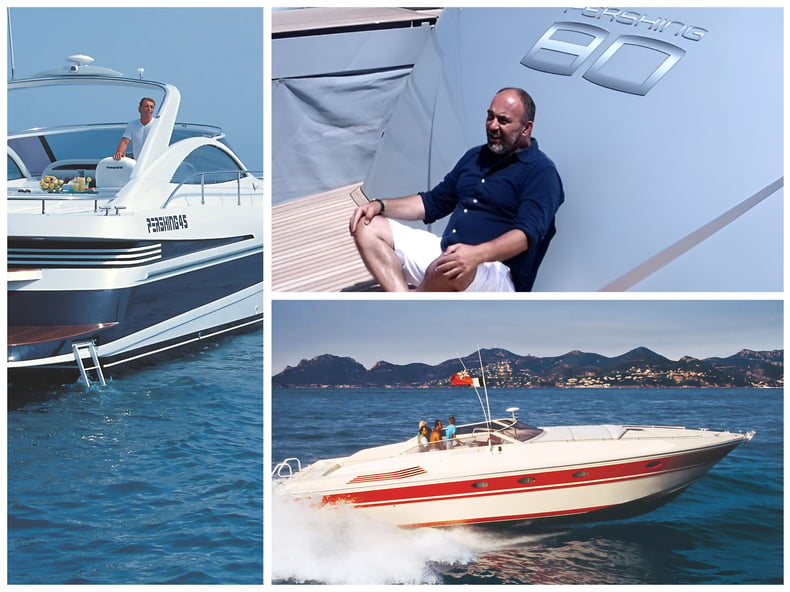
Our yachts attracted strong attention initially, but after two or three years the momentum began to slow. We knew we needed a new direction. That turning point came through our collaboration with **Fulvio De Simoni**, which resulted in the **Pershing 45**.
It was a breakthrough—quieter, wider, and far more spacious than the narrow, noisy competitors of the time. We had identified a clear niche. Sales reflected this instantly: three units in the first year, six the following year, and thirteen by the third.
Models such as the **Pershing 52** and **Pershing 40** expanded the range and gained particular popularity in markets like **Greece**, while Pershing’s reputation grew even stronger internationally.
[](https://www.ekkayachts.com/yachtsman-report/2025)
> ###### “Although sailing was an early passion, it remained dormant until I unexpectedly found myself on a sailing boat—immediately realising it was where I belonged.”
### *How did Pershing evolve after joining the Ferretti Group?*
Joining the **Ferretti Group in 1999** marked a major turning point. Our dealer network expanded from just a handful to more than **25 worldwide**, while annual production rose from **20 to 90 yachts**.
The **Pershing 70**, powered by a single water jet and a **4,000-horsepower gas turbine**, delivered an aircraft-like experience—reaching 50 knots in just 11 seconds.
A move to a larger facility in the early 2000s further improved efficiency, and the brand officially became **Pershing**, reinforcing its global identity.
### *You later founded WIDER Yachts. What inspired that move?*
In 2009, during the financial crisis, I attempted to buy Pershing back from Ferretti, but my offer was declined. I chose to step away and invest everything into creating **WIDER Yachts**, with the goal of redefining yacht design and propulsion.
WIDER introduced truly innovative features—**expandable terraces and diesel-electric propulsion**—dramatically reducing consumption and setting new benchmarks for efficiency and onboard living. Our yachts, particularly the Wider 150 and Wider 165, were internationally acclaimed, earning the title of the world’s quietest yachts. However, financial realities led me to sell my shares in Wider by 2017.
> “In 2017, Massimo Perotti approached me with an exciting proposition: to develop a sporty, high-performance range of yachts for Sanlorenzo.”
[-2.jpg?width=790&height=592&name=Born%20from%20vision%2c%20craftsmanship%2c%20and%20a%20deeply%20personal%20pursuit%20of%20something%20truly%20unique%2c%20this%20yacht%20is%20shaped%20by%20decades%20of%20passion%20and%20purpose.%20(1)-2.jpg)](https://www.ekkayachts.com/yachtsman-report/2025)
### *What drew you to Sanlorenzo?*
In 2017, **Massimo Perotti** invited me to collaborate on something entirely new for Sanlorenzo: the creation of a sporty, high-performance range. Given my background in Pershing’s performance-driven innovations and WIDER’s diesel-electric propulsion, it felt like a natural evolution.
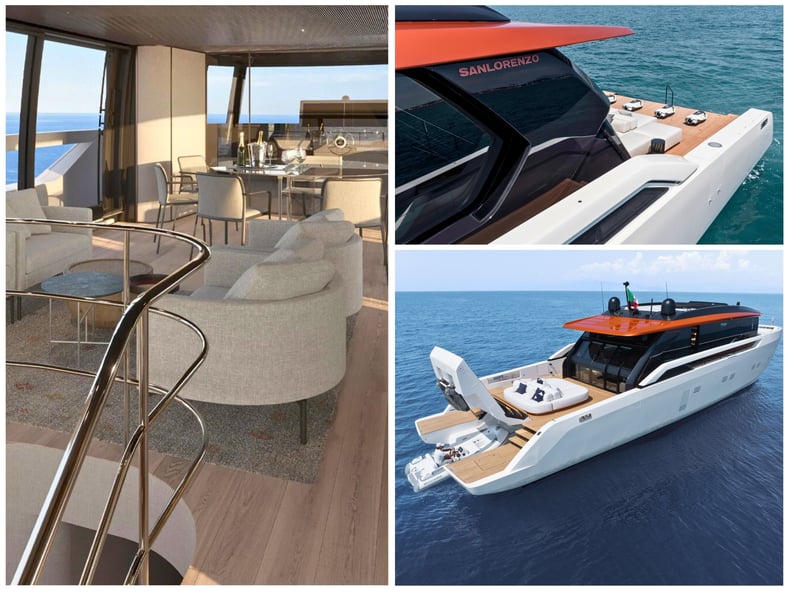
This collaboration led to the launch of the **SP – Smart Performance** line, beginning with the **SP110** and **SP92**. These yachts introduced a new balance of diesel-electric efficiency, performance, and distinctly modern aesthetics. From the outset, they stood apart for their bold identity and technical ambition.
---
### *How does the SP line differ from the rest of Sanlorenzo’s range—and what comes next?*
The SP line is intentionally niche. It sits apart from Sanlorenzo’s **SL, SD, and SX** series, which are rooted in long-range cruising and refined elegance. With SP, our goal was different: to create something fast, sleek, and emotionally driven—a performance-oriented identity that had never existed within the brand before.
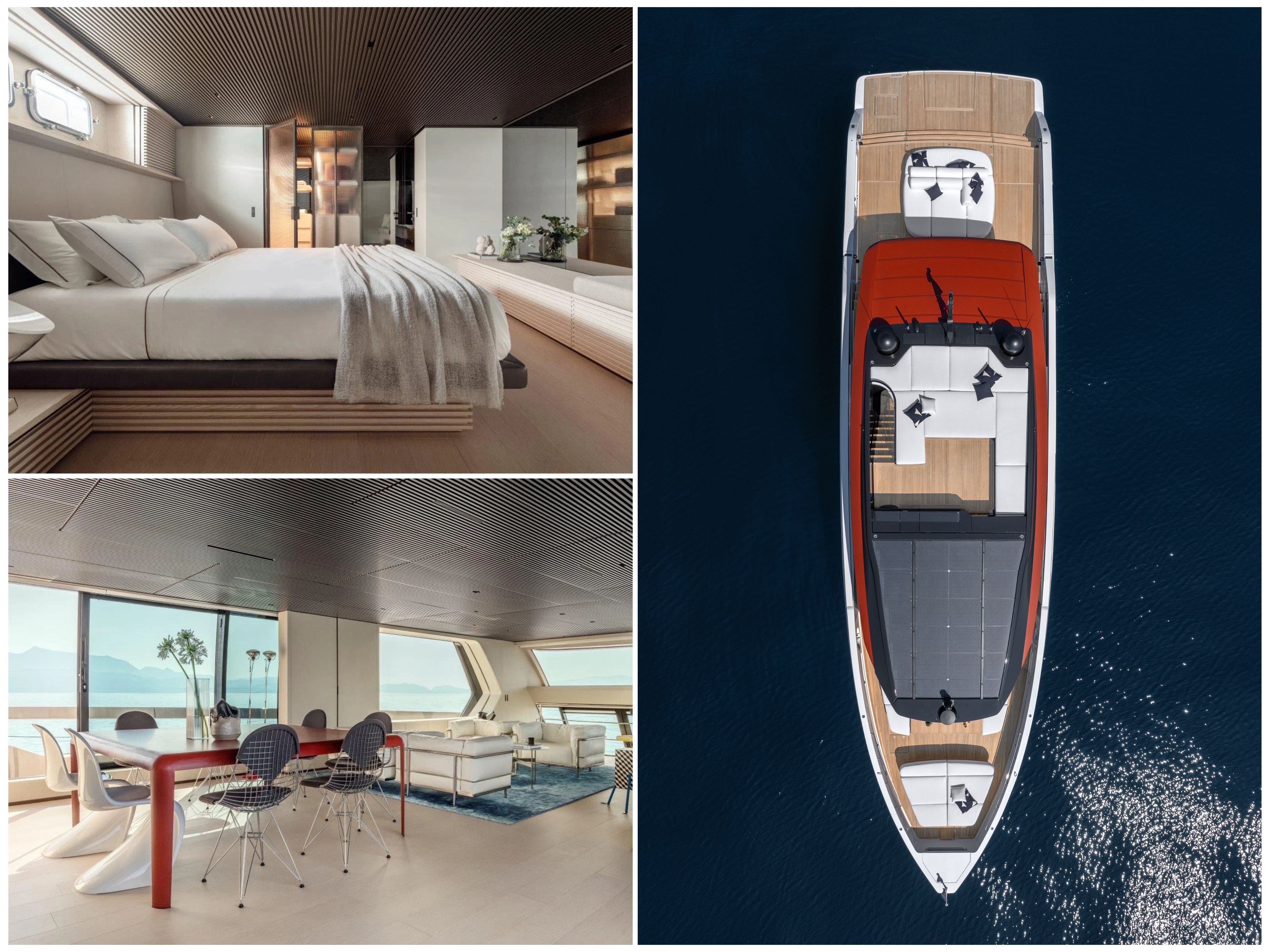
The **SP110** was the first expression of this vision: a diesel-electric yacht that combined speed, silence, and seamless indoor-outdoor living. Developed with **Zuccon International Project** and **Piero Lissoni**, it defined the core DNA of the SP range. The **SP92** followed the same philosophy in a more compact format.
Next, an **80–82-foot SP model**, set to debut soon will continue this trajectory—an exciting step forward that reinforces our commitment to innovation and performance.
### *Who have been the key influences throughout your career?*
**Fulvio De Simoni** played a pivotal role through his visionary design approach. **Norberto Ferretti** deeply influenced my way of thinking about business, while **Massimo Perotti** offered me the opportunity to innovate once again within a forward-thinking brand like Sanlorenzo. Above all, my family has been the constant foundation behind every venture.
---
### *What trends do you see shaping the future of yacht design and ownership?*
Yachts are increasingly becoming **floating villas**, with owners prioritising comfort, space, and life at anchor—sometimes at the expense of pure seakeeping. Younger owners, in particular, value social spaces and connection to the sea, accelerating the move toward expansive glazing and open interiors.
From a propulsion standpoint, **diesel-electric systems** remain the most practical and sustainable solution today. While hydrogen presents exciting possibilities, it still faces significant logistical challenges—even if its long-term potential is undeniable.
---
### *What legacy do you hope to leave in yachting?*
For me, legacy is not individual achievement—it’s about the **respect and passion of the people you work with**. Every success is the result of collective effort. I have always believed in innovation, originality, and thinking beyond convention—leading rather than following.
If there is one lasting impact, it is inspiring others to push boundaries and continue redefining what yachting can be.
- [Click Here to Learn More about the Sanlorenzo SP110](https://www.ekkayachts.com/sales-and-purchase/exclusive-dealership/sanlorenzo/sp110)
- [Click Here to Learn More about the Sanlorenzo SP92](https://www.ekkayachts.com/sales-and-purchase/exclusive-dealership/sanlorenzo/sp92)
[](https://www.ekkayachts.com/yachtsman-report/2025)
Topics: [yachting](https://blog.ekkayachts.com/blog/tag/yachting), [sanlorenzoyacht](https://blog.ekkayachts.com/blog/tag/sanlorenzoyacht), [Sanlorenzo SL86](https://blog.ekkayachts.com/blog/tag/sanlorenzo-sl86), [sp92](https://blog.ekkayachts.com/blog/tag/sp92), [sp110](https://blog.ekkayachts.com/blog/tag/sp110), [tilli antonelli](https://blog.ekkayachts.com/blog/tag/tilli-antonelli)
## Subscribe to "The Yachtsman Report"
### Yachting as we see it
Yachting is deeply "embedded in our DNA" and it is our pleasure to share our 40+ years of knowledge and experience with a chosen group of followers. Fill-out your details in the form herein and be part of our "circle of knowledge"!
By signing-up, you will receive periodical emails containing our views and opinions on:
- Industry news such as shipyard and market news
- New yacht announcements and launches
- General interest news such as new technologies, trends, materials, legal and tax updates etc.
- New destinations for yachting and itineraries
### Subscribe Here!
### Recent Posts
### Posts By Author
- [EKKA marketing team (8)](https://blog.ekkayachts.com/blog/author/ekka-marketing-team)
- [Ekka Charter Team (7)](https://blog.ekkayachts.com/blog/author/ekka-charter-team)
- [EKKA YACHTS (2)](https://blog.ekkayachts.com/blog/author/ekka-yachts)
- [Panos Touloupiadis (2)](https://blog.ekkayachts.com/blog/author/panos-touloupiadis)
- [EKKA YACHTS - EXCLUSIVE BRANDS (1)](https://blog.ekkayachts.com/blog/author/ekka-yachts-exclusive-brands)
- [Dimitris Kyriazakos (1)](https://blog.ekkayachts.com/blog/author/dimitris-kyriazakos)
See all
ATHENS • MYKONOS • CYPRUS
MEMBER OF
CONTACT EKKA
T: +30 210 984 8992
E: [info@ekkayachts.com](mailto:info@ekkayachts.com)
[CONTACT VIA FORM ›](http://www.ekkayachts.com/contact-us/)
STAY IN TOUCH
- SALES NEWSLETTER ›
- CHARTER NEWSLETTER ›
- BROKERS NEWSLETTER ›
- CREW NEWSLETTER ›
Copyright © 2018 EKKA Yachts.[Privacy Policy](http://www.ekkayachts.com/privacy-policy)